
An abnormal heartbeat, chest tightness, or unexplained dizziness can be unsettling, and those symptoms deserve a real clinical evaluation, not a guess. MEDHERO offers on-site EKG testing performed and interpreted by Dr. Greg Moreno, MD and Dr. Keith Yablonicky, MD, two board-certified emergency physicians trained at the LA County+USC Trauma Center. Their background in high-acuity cardiac care means your results aren’t just recorded, they’re read by clinicians who have managed cardiac emergencies firsthand. You get accurate answers the same day, without a hospital visit or a specialist referral.
EKG

Understanding EKG
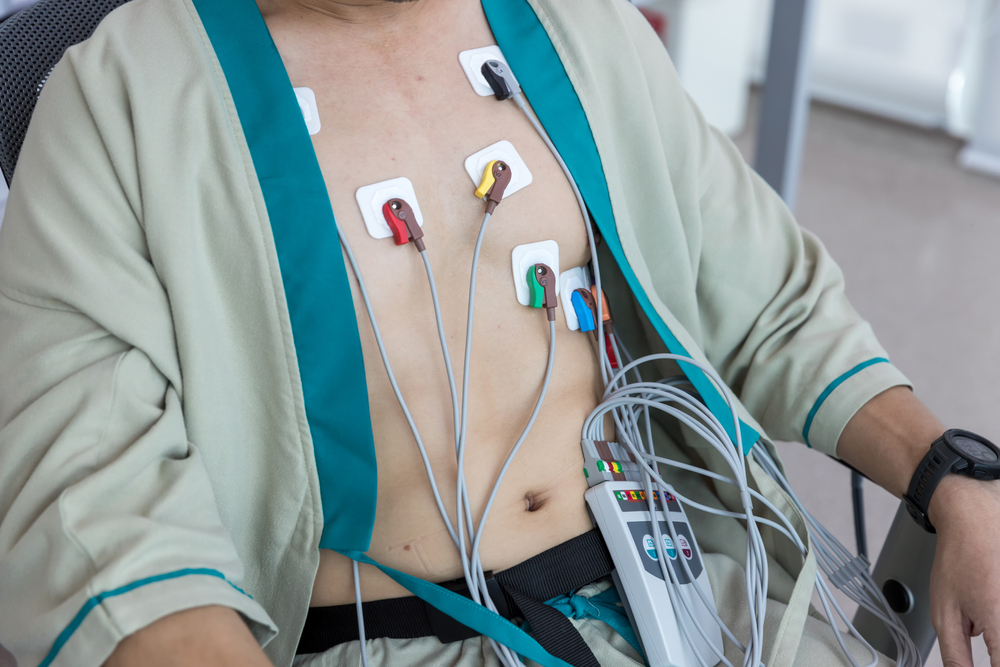
An EKG, or electrocardiogram, is a non-invasive diagnostic test that records the electrical activity of your heart. Every time your heart beats, it generates a small electrical impulse. The EKG captures those impulses through electrode patches placed on your skin and displays them as a series of waves on a graph. This wave pattern gives medical providers a clear picture of how your heart is functioning, including its rate, rhythm, and the timing of each beat.
EKGs are one of the most commonly used tools in medical care because they provide quick, objective information about the heart without any needles, radiation, or discomfort. They are used to evaluate a wide range of concerns, including chest pain, palpitations, shortness of breath, and dizziness. They are also ordered as a preventive measure during routine physicals or before starting new medications. Because the heart’s electrical system controls every beat, even small irregularities in that system can point to conditions that need attention, and an EKG is often the first step in identifying them.
Benefits of EKG
Fast Answers When You Need Them Most
An EKG gives our provider real-time information about your heart’s electrical function within minutes. Rather than waiting days for test results, you get immediate insight that can guide treatment decisions on the spot. In an urgent care setting, this speed can be the difference between catching a serious condition early and missing it altogether.
Completely Painless and Non-Invasive
There are no needles, no radiation, and no discomfort involved in an EKG. Small electrode patches are placed on your skin, the signals are recorded, and the patches are removed. For patients who are anxious about medical testing, the straightforward, painless nature of an EKG makes it an easy step toward better heart health awareness.
Supports Accurate Diagnosis Across Multiple Conditions
An EKG doesn’t just check for heart attacks. It can detect arrhythmias, heart enlargement, electrolyte imbalances affecting heart rhythm, and signs of prior cardiac events you may not have known occurred. This broad diagnostic value makes it a critical first step in evaluating a wide range of symptoms, including unexplained fatigue and recurring chest tightness.
Useful for Routine Health Screening
EKGs aren’t only for emergencies. Athletes, older adults, and patients managing chronic conditions like high blood pressure or diabetes benefit from periodic EKG screening to track heart health over time. Having a baseline EKG on record also makes it easier for our provider to detect changes if symptoms develop in the future.
Helps Guide Safe Treatment Decisions
Before prescribing certain medications or recommending physical activity programs, providers often need to know how your heart is functioning. An EKG ensures that the treatment plan our provider recommends is appropriate for your specific heart health profile. This step protects you and helps your care team make informed, evidence-based decisions.
Our EKG Diagnostic Process
Reviewing Your Symptoms and Heart Health History
Our provider will start by reviewing your symptoms, medical history, and the reason for the test. Dr. Greg Moreno, MD and our clinical team take time to understand your full picture before proceeding because context shapes interpretation. This brief conversation ensures that your EKG results are read with your individual health background in mind, not just as a standalone graph.
Building a Diagnostic Plan Around Your Specific Concern
Not every patient comes in for the same reason, and your care reflects that. Based on your symptoms and history, our provider will determine whether the EKG is part of a broader diagnostic workup or a focused evaluation of a specific concern. If additional testing, such as lab work through our on-site CLIA-accredited laboratory, is needed alongside the EKG, our provider will incorporate that into your plan right away.
Placing the Electrodes and Recording Your Heart’s Activity
The EKG itself takes only a few minutes to perform. You’ll lie down while a trained staff member places electrode patches on your chest, arms, and legs. The machine records the electrical activity of your heart and produces a printed or digital tracing that our provider reviews immediately, right there in the clinic.
Understanding Your Tracing and What It Means for You
Our provider will walk you through the findings in plain language so you understand what the results mean for your health. Dr. Keith Yablonicky, MD emphasizes patient education as a core part of every visit, and you should leave knowing exactly what was found and what the next steps are. If your results are normal, our provider may recommend lifestyle habits that support continued heart health.
Coordinating Next Steps If Your EKG Flags a Concern
If your EKG shows anything that warrants further evaluation, our provider will discuss next steps before you leave, including a referral to a cardiologist, additional monitoring, or a return visit. Our team coordinates follow-up care to make sure nothing falls through the cracks. You’ll always have a clear path forward rather than leaving with unanswered questions.
Why Choose Us for EKG
Most urgent care clinics can perform an EKG, but interpreting one accurately is a different skill entirely. At MEDHERO, EKGs are performed by emergency medicine-trained physicians who have read thousands of cardiac tracings in high-stakes clinical environments. Dr. Greg Moreno, MD founded our practice to bring that level of expertise to an accessible, community-based urgent care setting.
Our in-house lab, on-site pharmacy, and full urgent care capabilities mean that if your EKG points to something that needs prompt attention, we’re equipped to act on it right then, in the same visit. Unlike a standalone diagnostic center, we can order labs, dispense medications, and initiate treatment immediately based on your results. Both locations are open daily with walk-in availability, so you’re never left waiting for answers when it matters most.
Protect Your Heart Health With Our Reliable and Accurate EKG
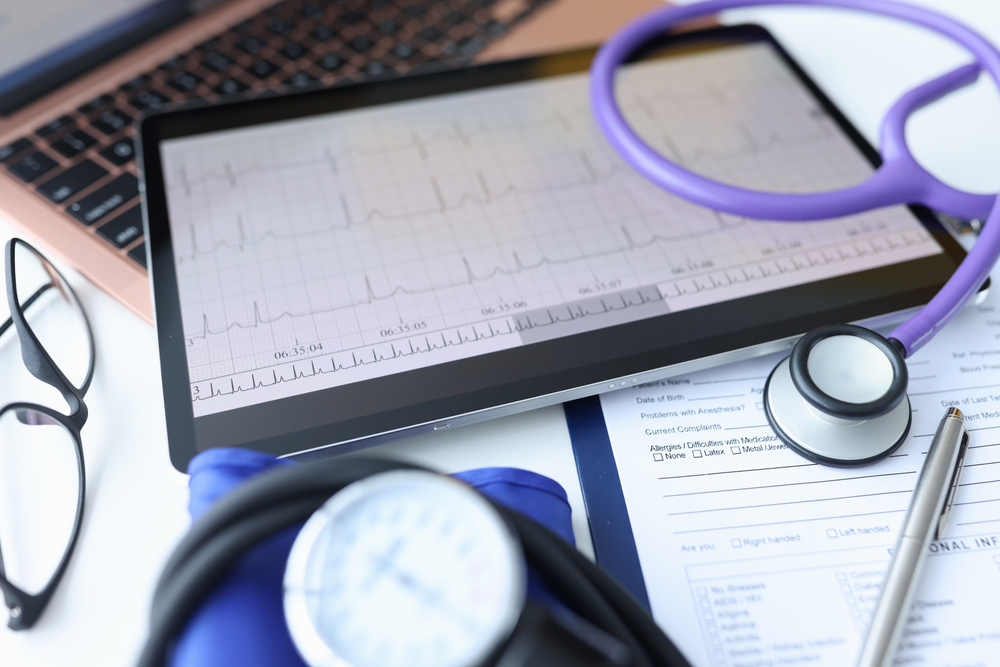
Your heart health is too important to put off. An EKG is a quick, painless test that can reveal critical information and give you real clarity about how your heart is functioning. Few diagnostic tests give you this much clinical clarity this fast. Dr. Greg Moreno, MD and Dr. Keith Yablonicky, MD have built our practice on the belief that every patient deserves accurate answers and a clear path forward. Our entire team at MEDHERO is ready to help with no long waits and no runaround.
Our San Clemente and La Costa/Carlsbad locations are open daily, no appointment needed. Use Google Maps to find us, check our Yelp page to hear directly from patients who have been in your shoes, and call 949.207.3603 or 760.652.6070 if you have questions before coming in. Stay connected on Facebook and Instagram for the latest on our services, team updates, and urgent care tips from our emergency-trained physicians.

FAQs
What is an EKG?
An EKG, short for electrocardiogram, is a diagnostic test that measures and records the electrical signals your heart produces with each beat. Small electrode patches placed on your skin detect these signals and display them as a wave pattern on a graph. It is one of the most widely used tools in medicine for evaluating heart health quickly and without discomfort.
What does an EKG show?
An EKG can reveal your heart rate, heart rhythm, and whether electrical signals are traveling through your heart normally. It can detect conditions like atrial fibrillation, heart attacks, heart block, and enlargement of the heart chambers. It also helps identify electrolyte imbalances and the effects of certain medications on cardiac function.
How long does an EKG take?
An EKG is one of the quickest diagnostic procedures available, with the actual recording completed in just a few minutes. Electrode placement, signal capture, and patch removal are all straightforward steps. Our provider will walk you through your results so you leave with a clear understanding of your heart health. The entire appointment is typically brief, often done in 15-20 minutes.
How to read an EKG?
Reading an EKG involves analyzing waves labeled P, Q, R, S, and T, each representing a different phase of the heart’s electrical cycle. Providers examine the shape, spacing, and height of these waves to identify normal patterns and flag deviations that may signal a problem. EKG interpretation requires medical training, which is why a qualified provider always reviews your results.
What does a normal EKG look like?
A normal EKG shows a consistent, repeating pattern with clearly defined waves at regular intervals. The P wave reflects activity in the upper chambers, the QRS complex reflects the lower chambers, and the T wave shows the heart’s recovery phase. Even minor variations can carry clinical significance and require a trained eye to interpret accurately.
